Back to Demos
42/54
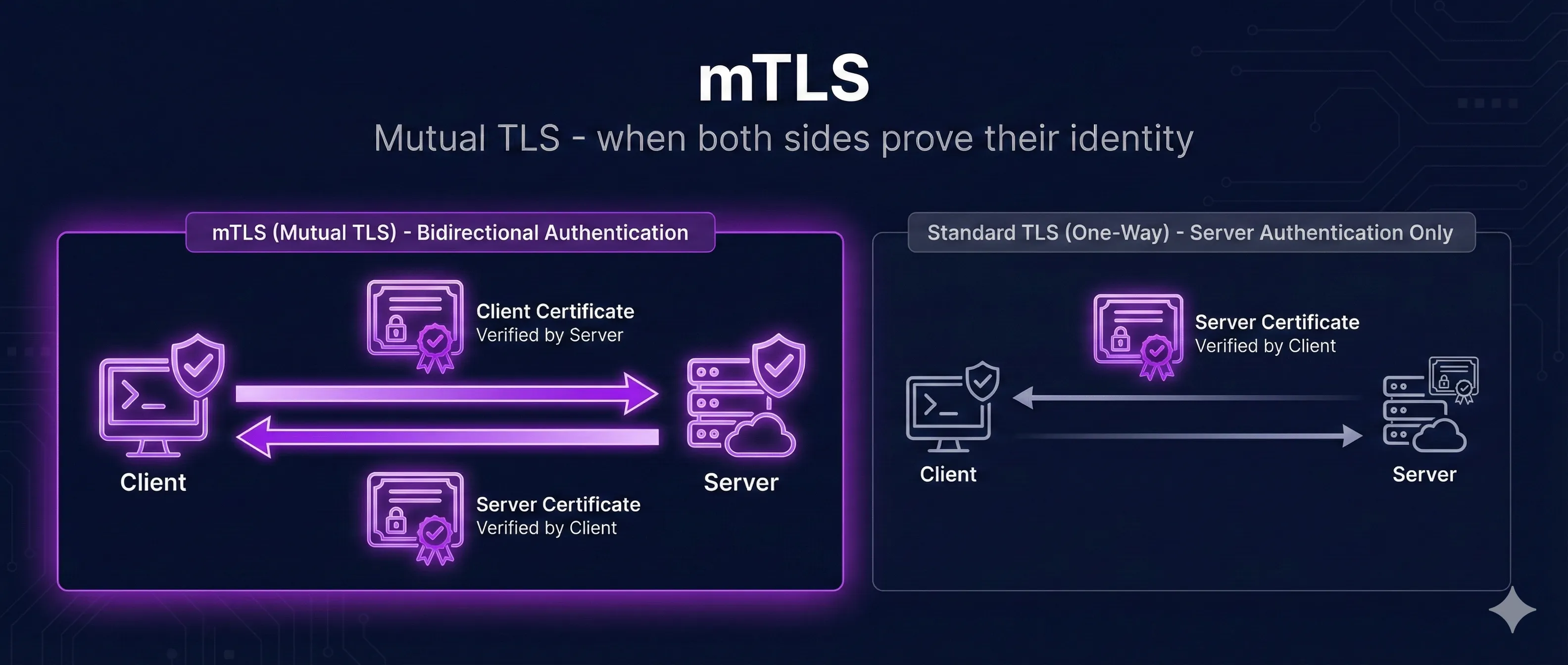
mTLS - Mutual TLS Authentication
Two-way authentication where BOTH client and server prove their identity
Regular TLS
Client
Server
- Server proves identity
- Client is ANONYMOUS
- "I know who I'm talking to, but they don't know who I am"
Encryption: YES
Server Auth: YES
Client Auth: NO
mTLS (Mutual TLS)
Client
Server
- Server proves identity
- Client proves identity
- "We BOTH know who we're talking to"
Encryption: YES
Server Auth: YES
Client Auth: YES
Standard TLS mTLS-specific
What Server Sees (Regular TLS)
Client Identity: Unknown
IP Address: 192.168.1.100
User-Agent: Mozilla/5.0...
Authentication: None (need API key/login)
What Server Sees (mTLS)
Client Identity: service-inventory.prod.internal
Organization: Acme Corp
Certificate Serial: 0A:1B:2C:3D...
Valid Until: 2024-12-31
Issuer: Acme Internal CA
Authentication: Cryptographically verified ✓
mTLS ensures both parties are cryptographically authenticated before exchanging data
Want to learn more?
Read our complete guide on mutual TLS authentication